Riia 4, 51004 Tartu, Estonia
Tel: +372 730 1200
Fax: +372 730 1201
E-mail: pallas@pallas.ee
ARTGALLERY

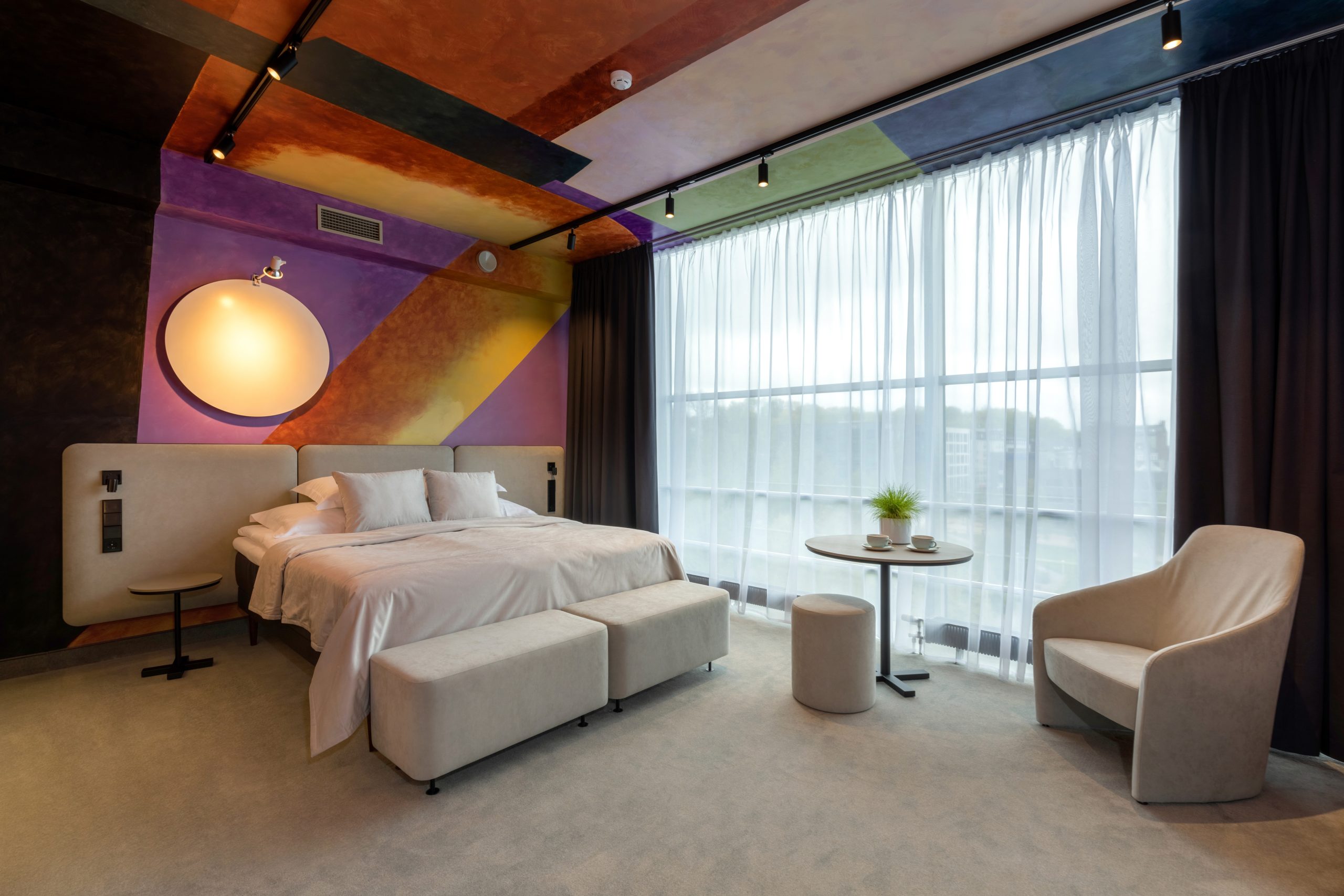
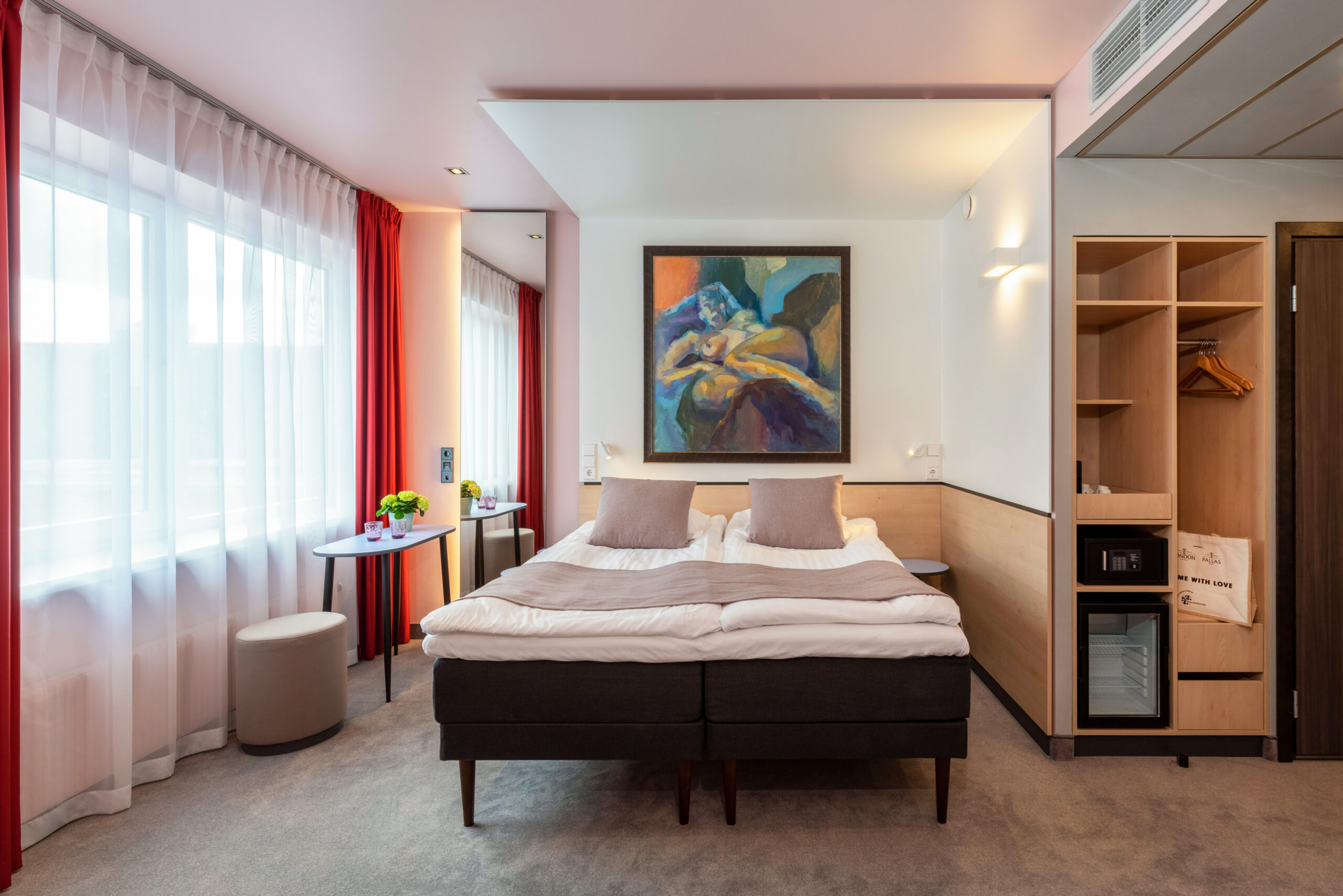
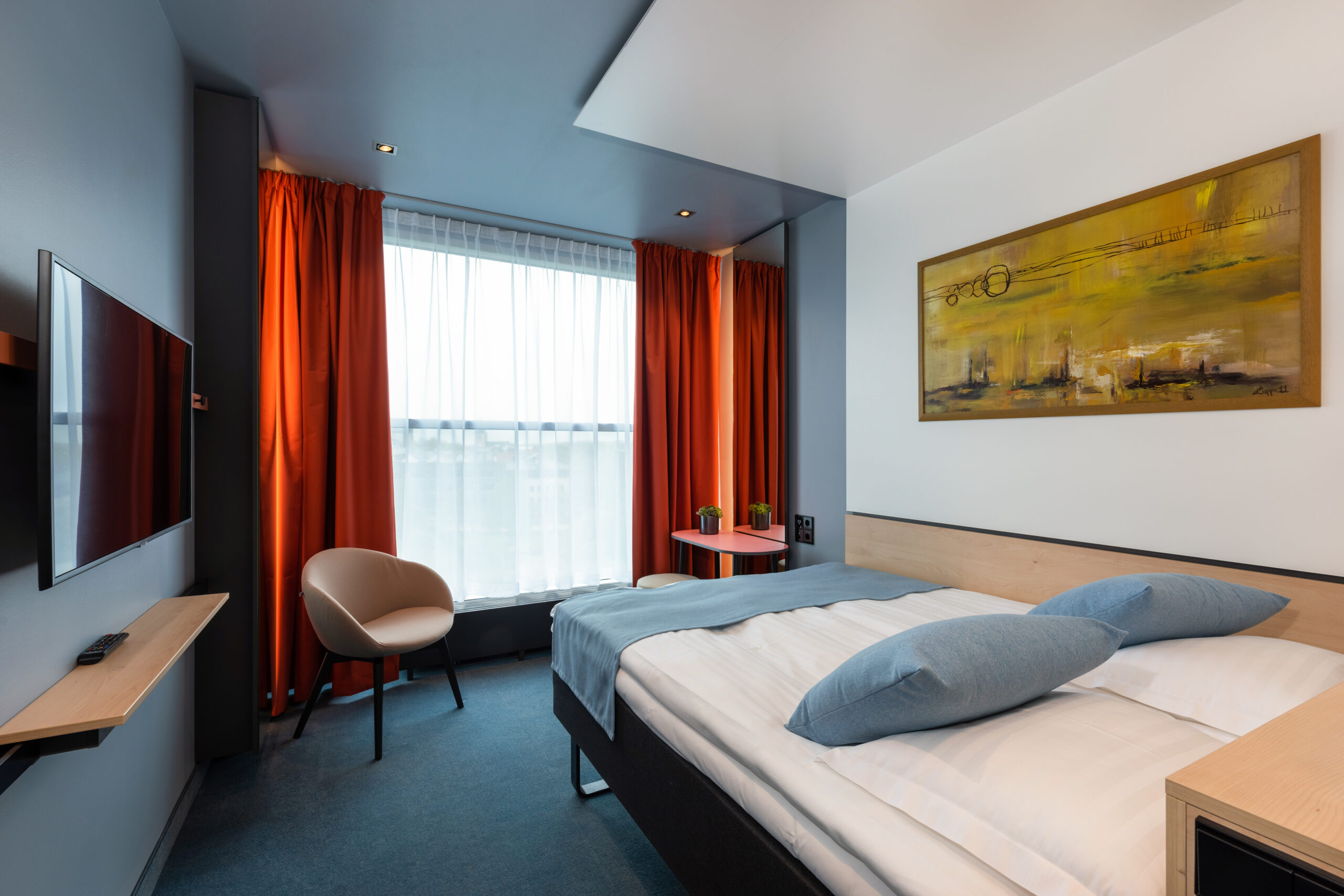
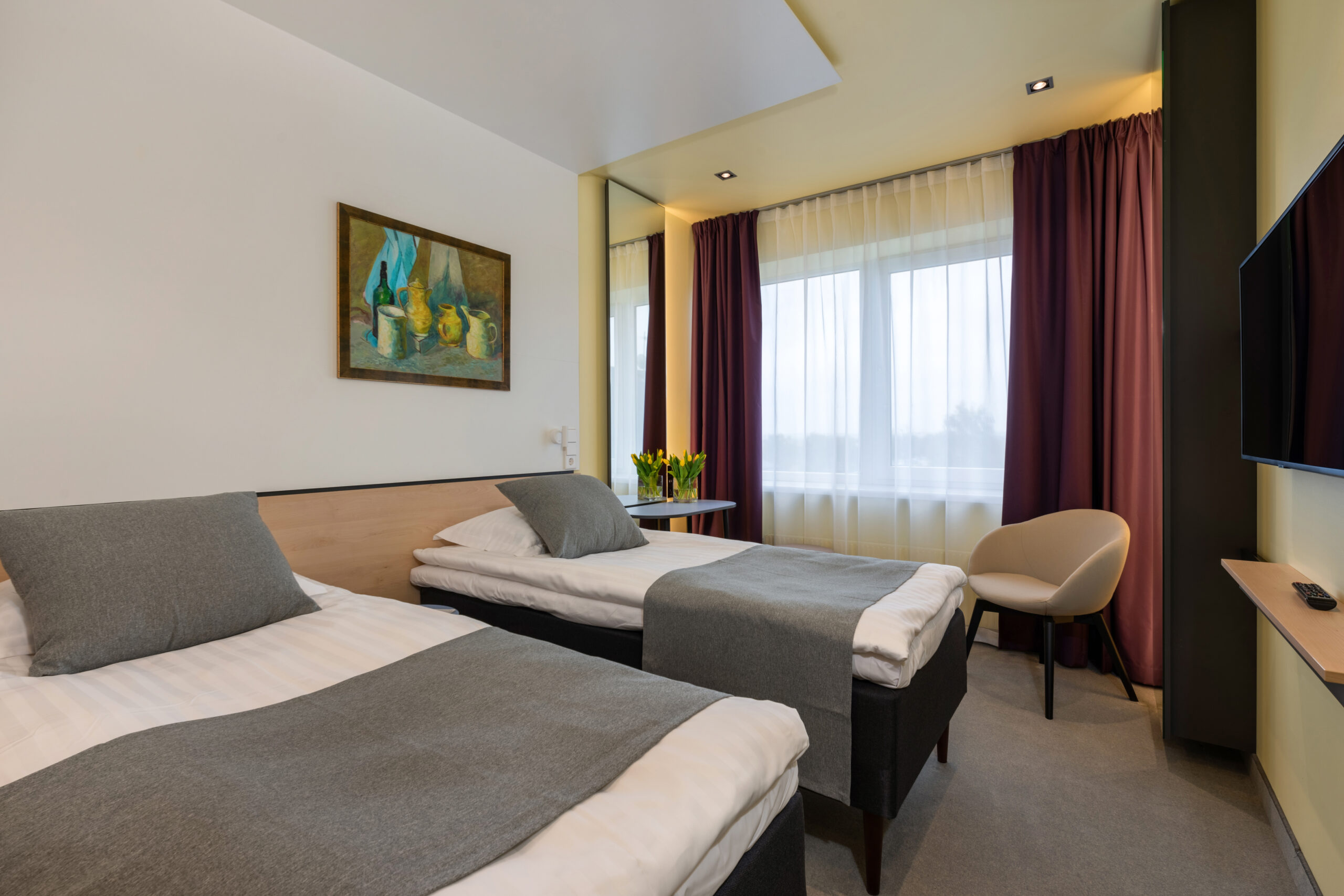
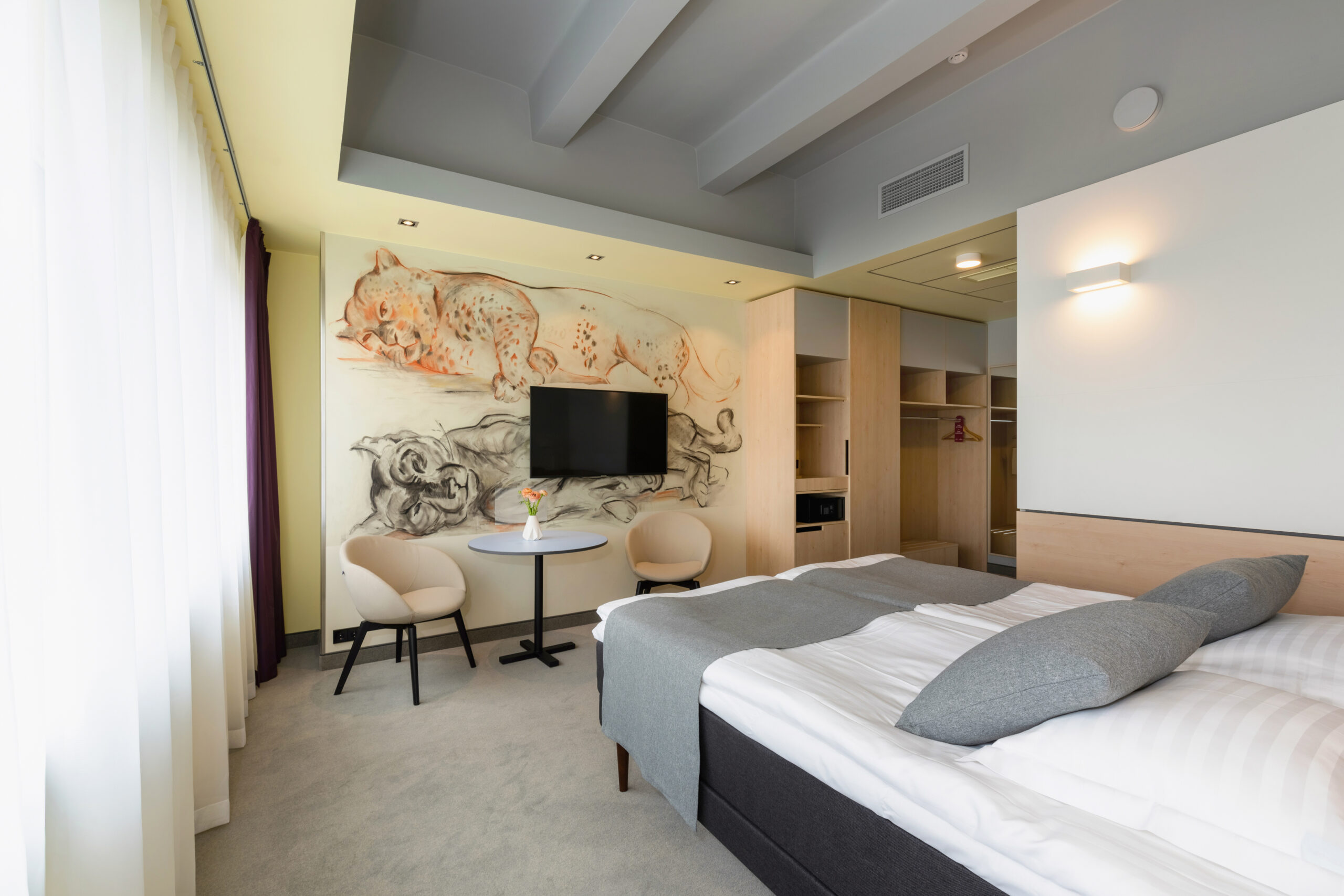
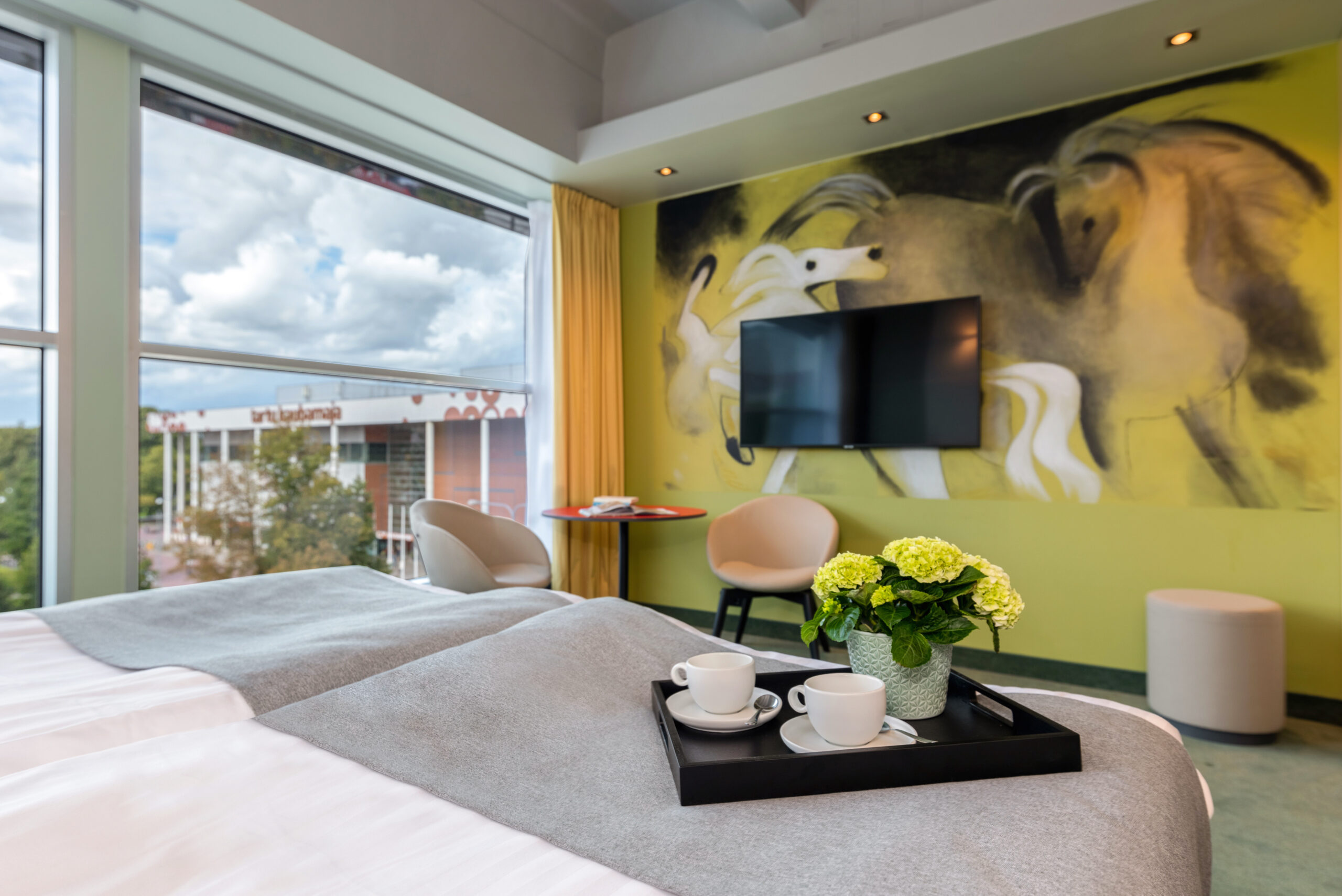
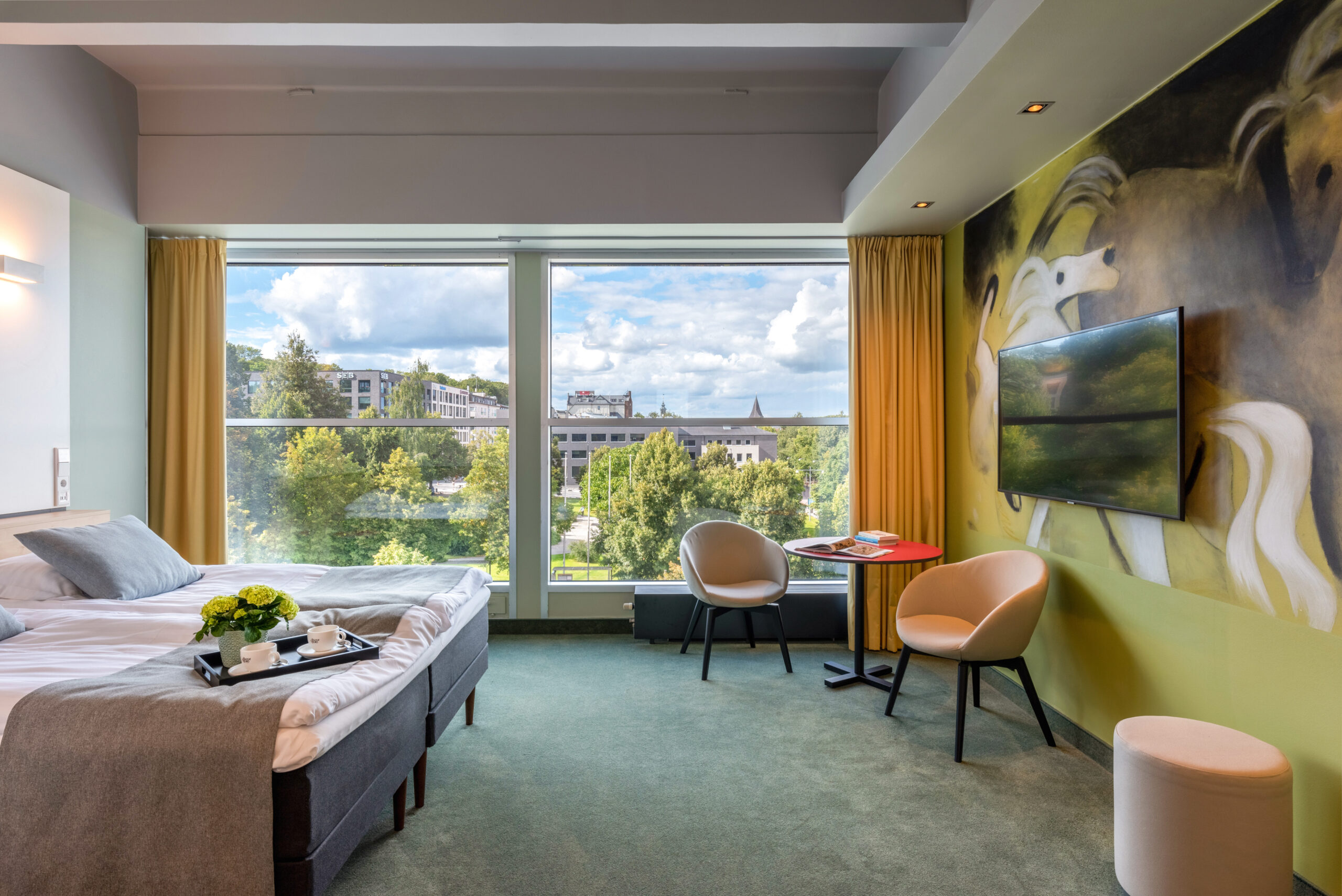
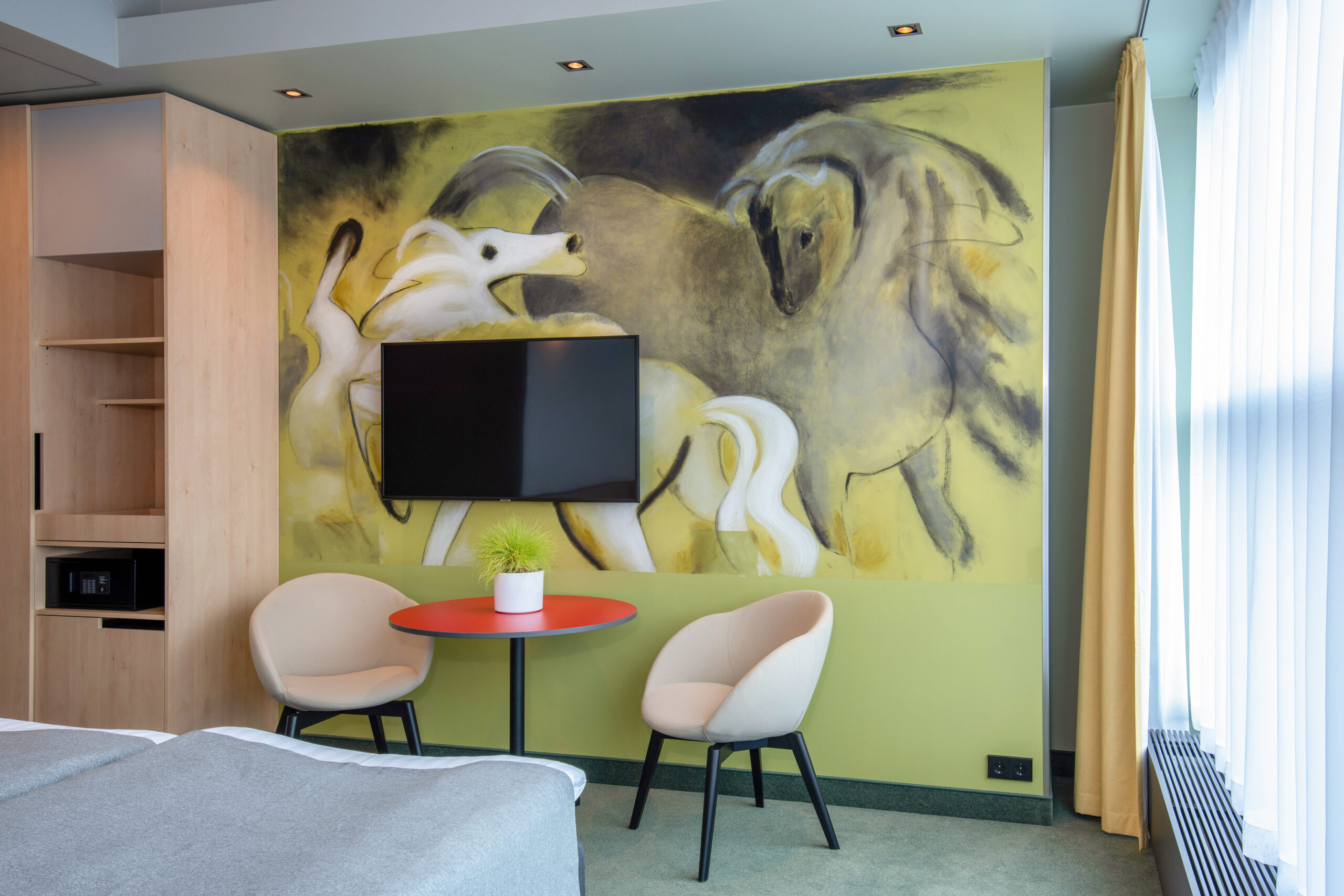
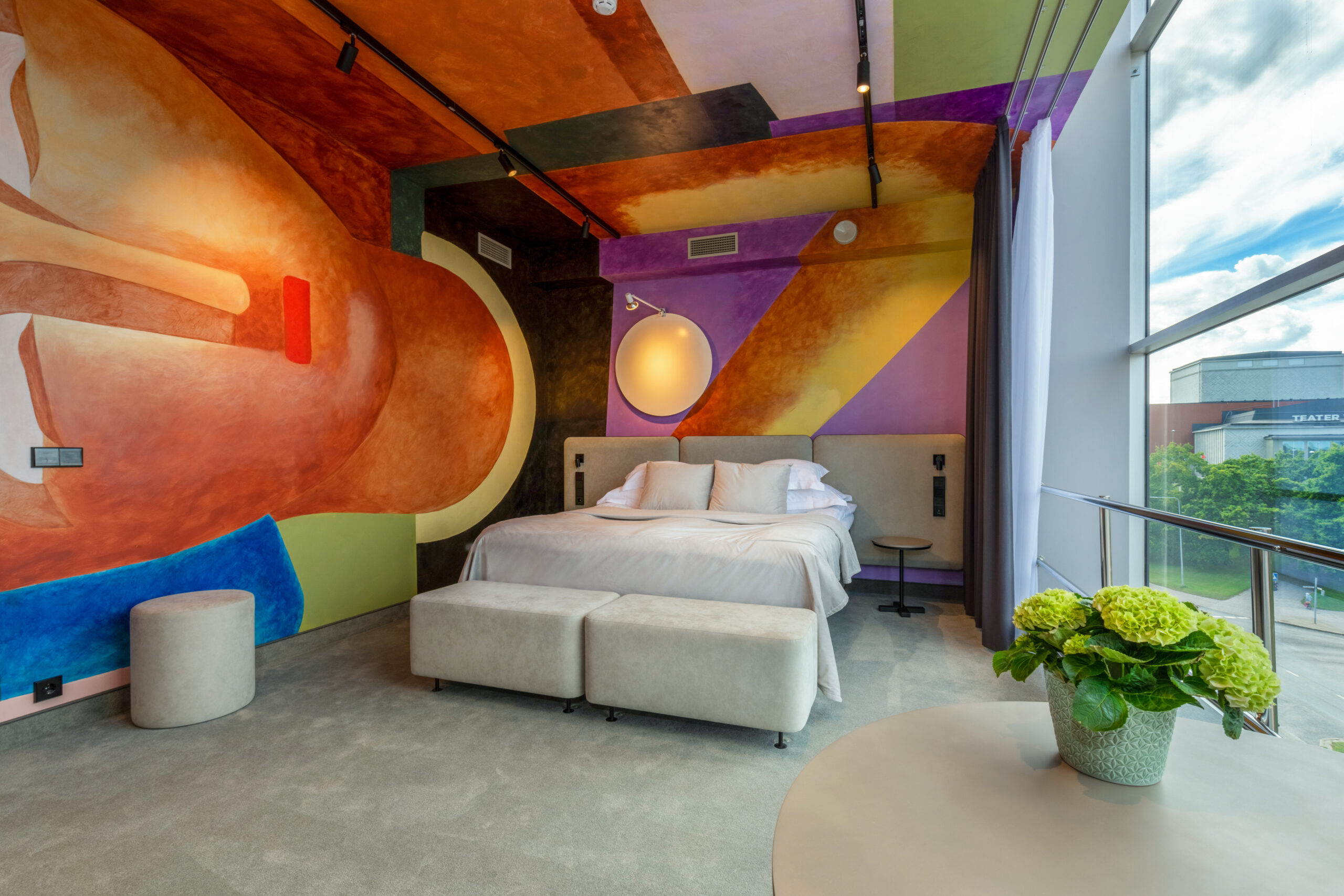
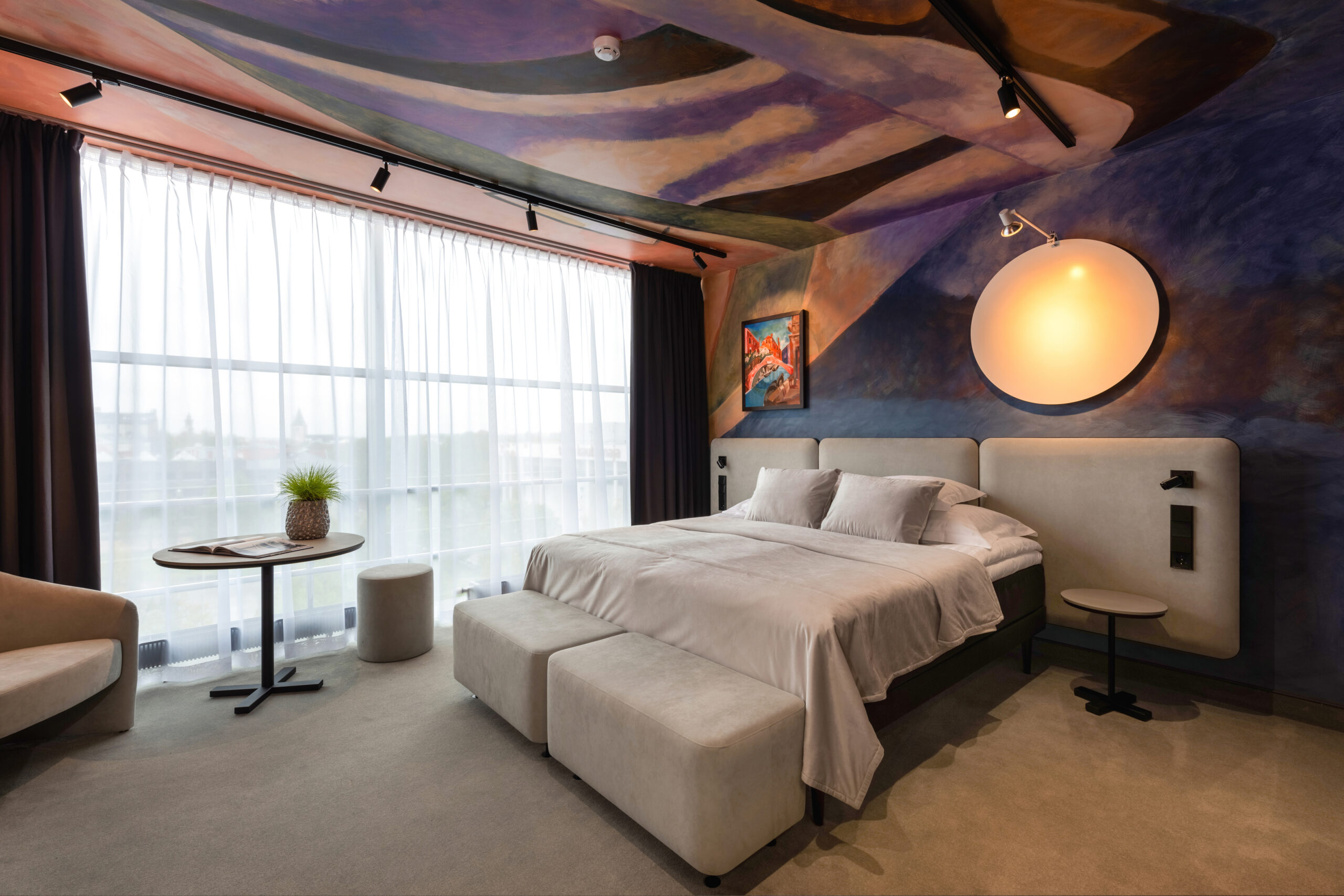
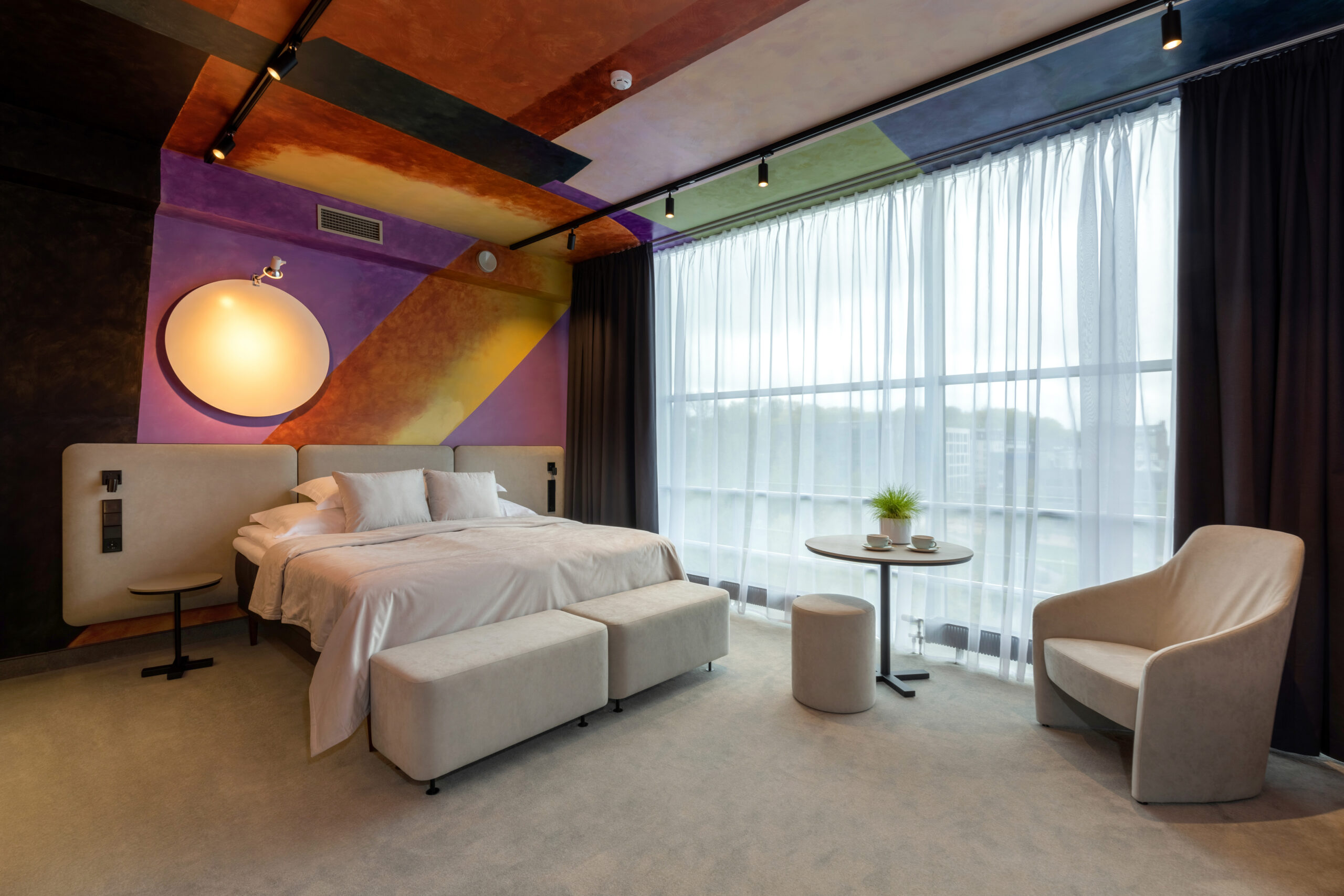
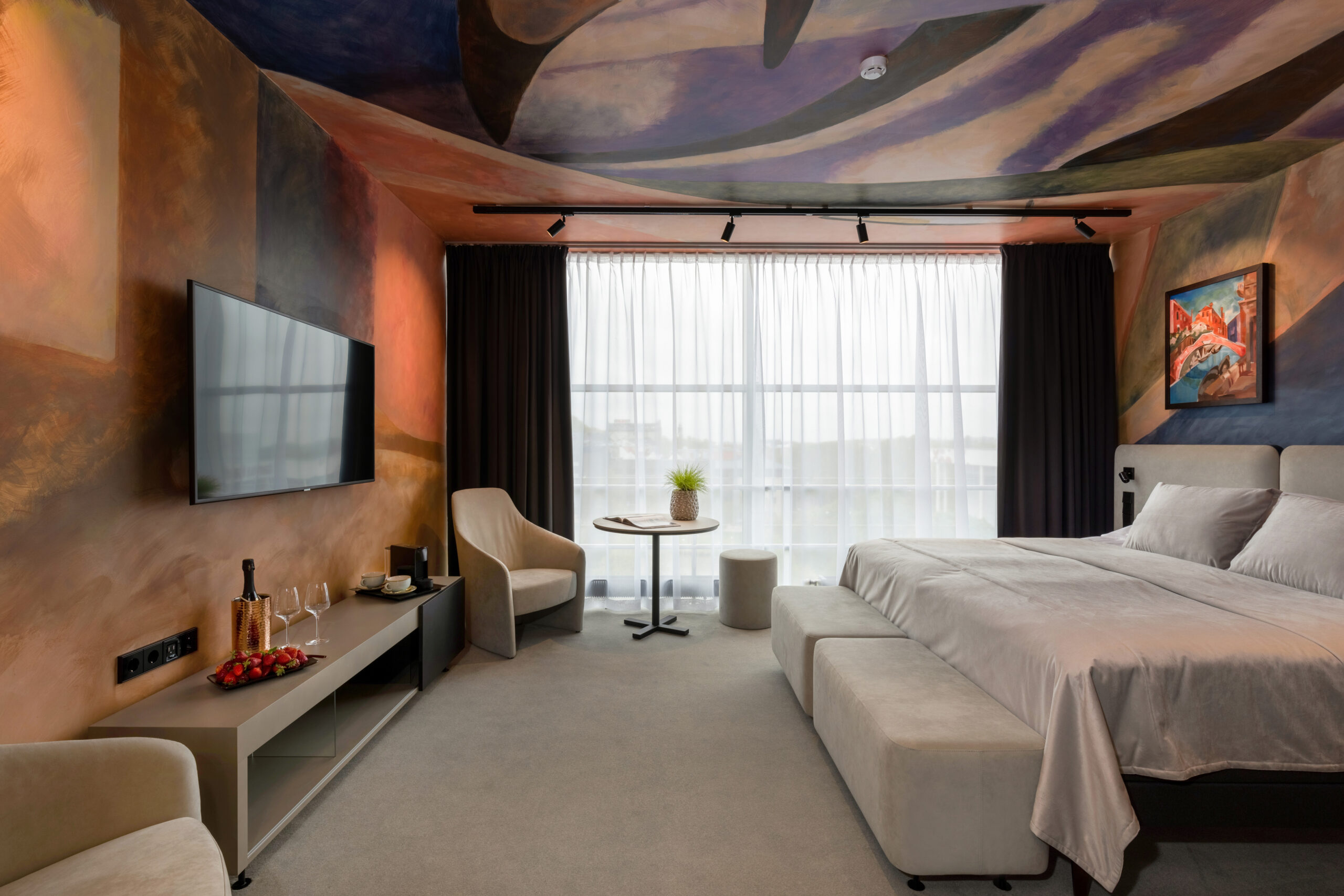
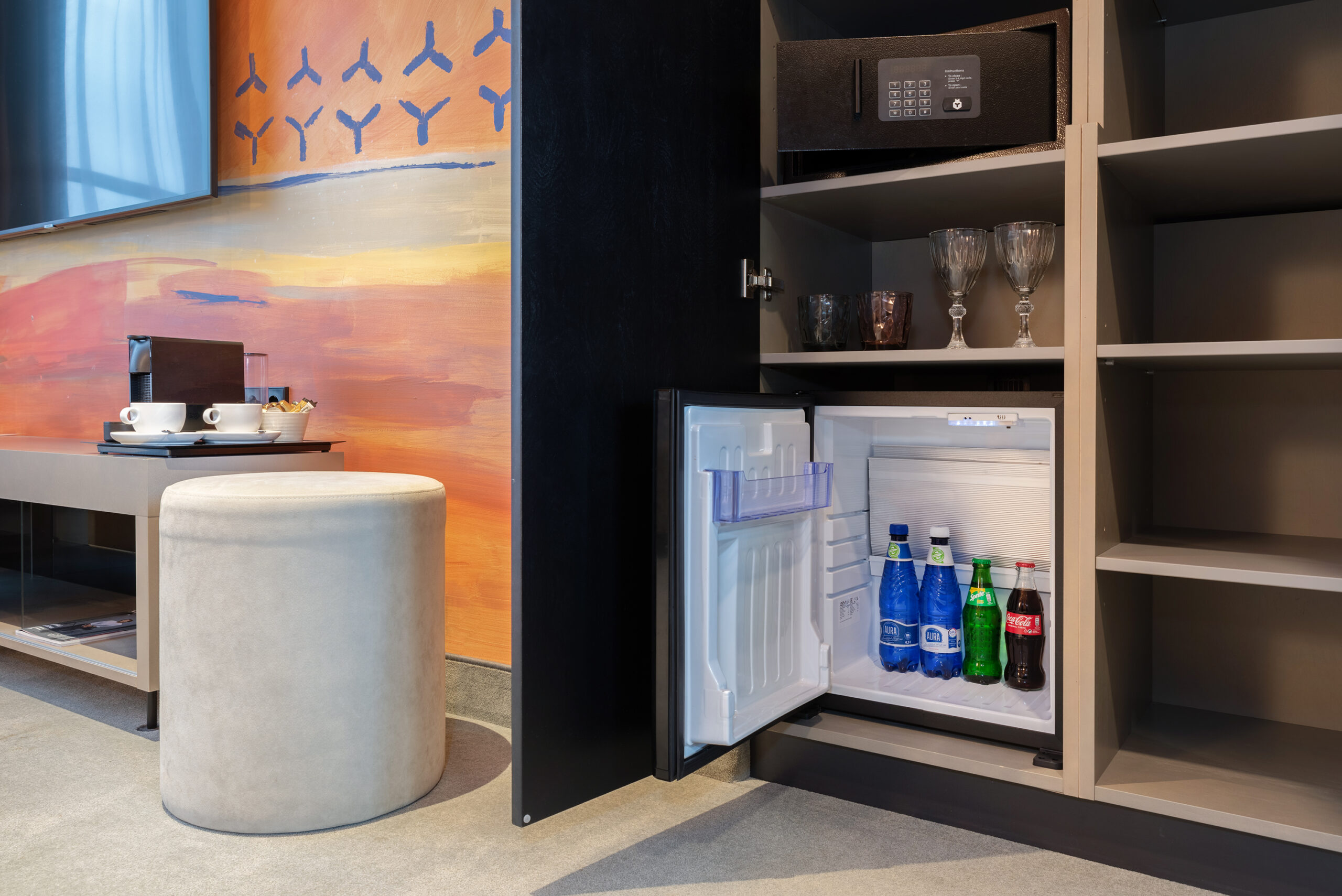
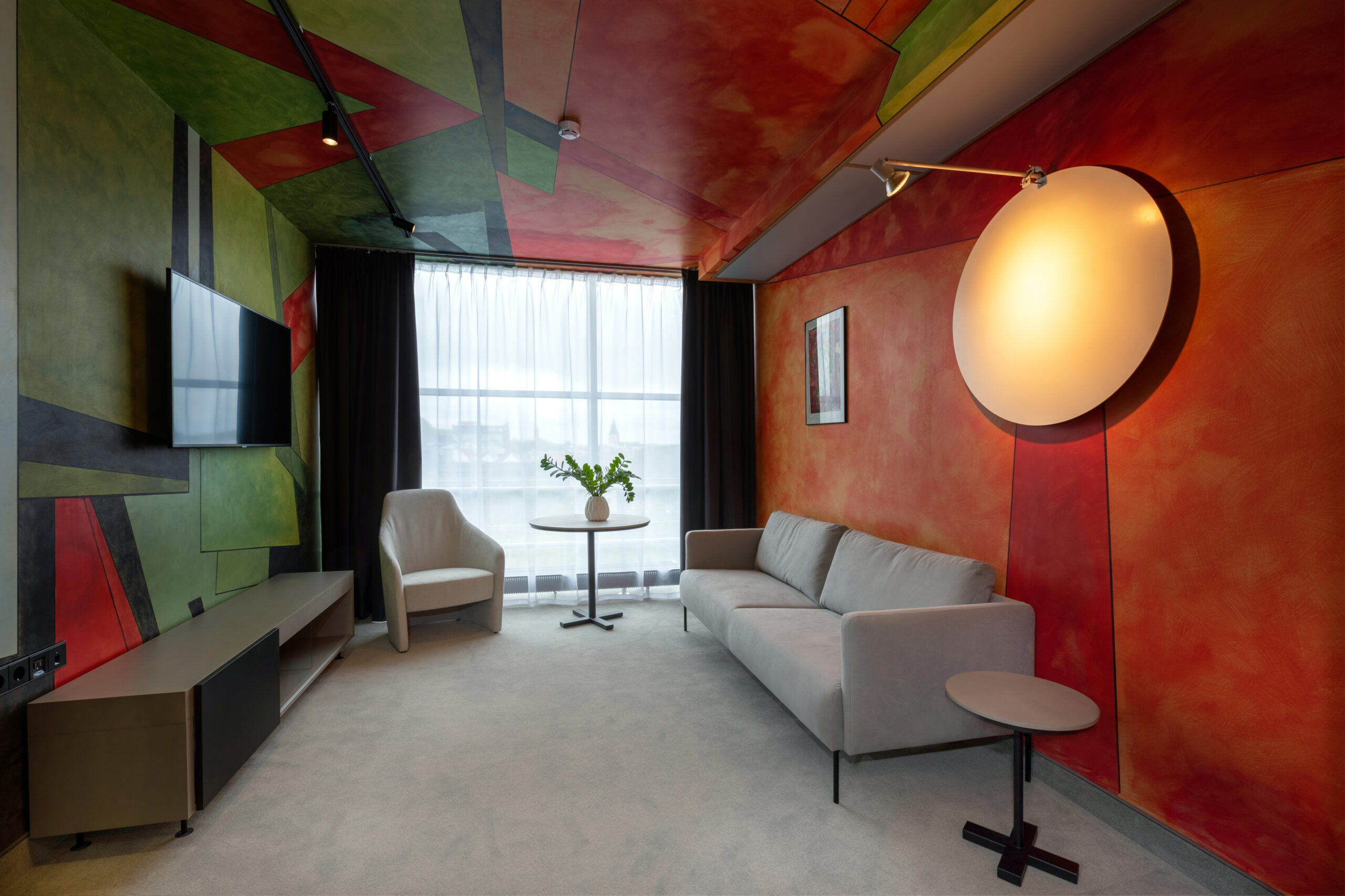
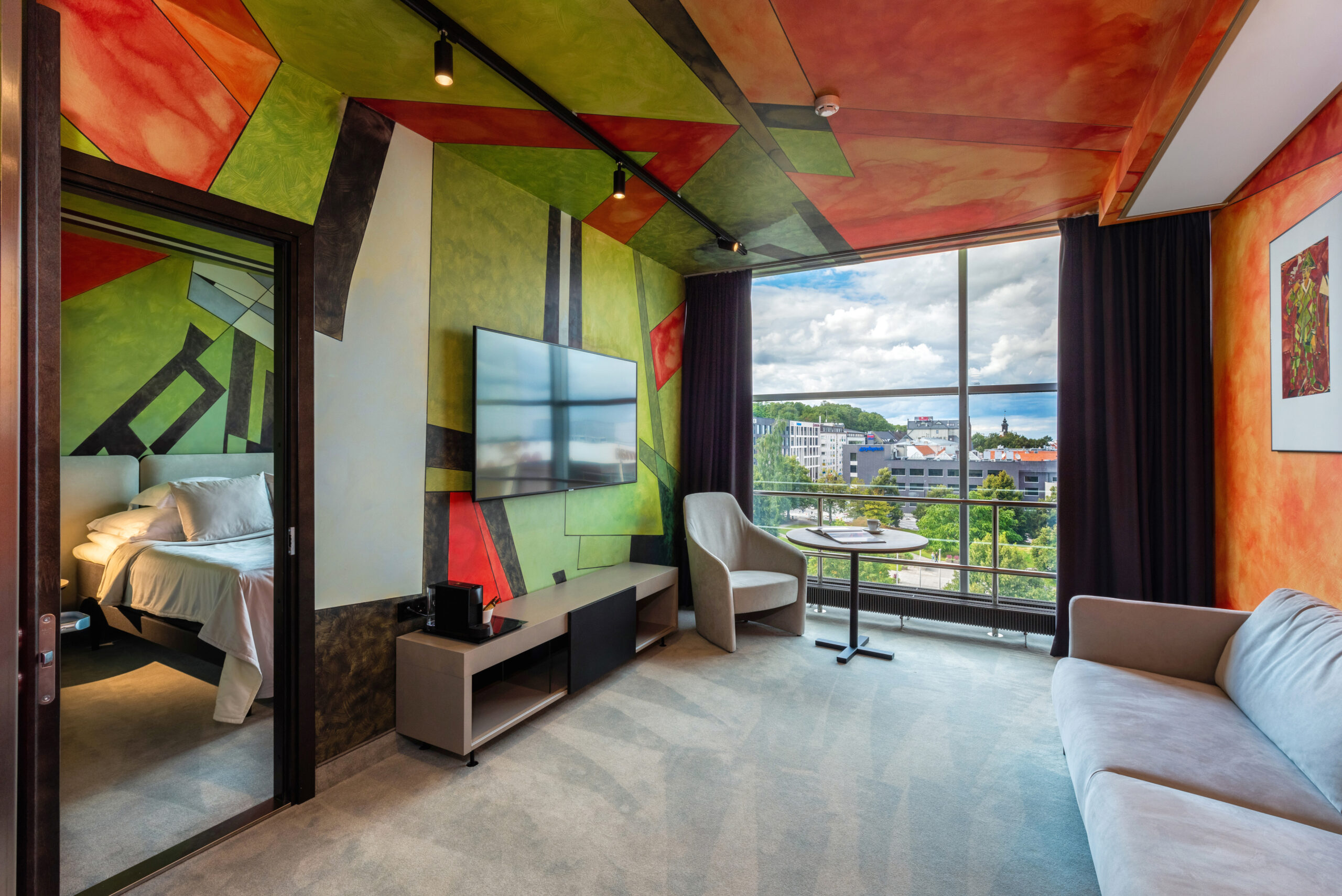
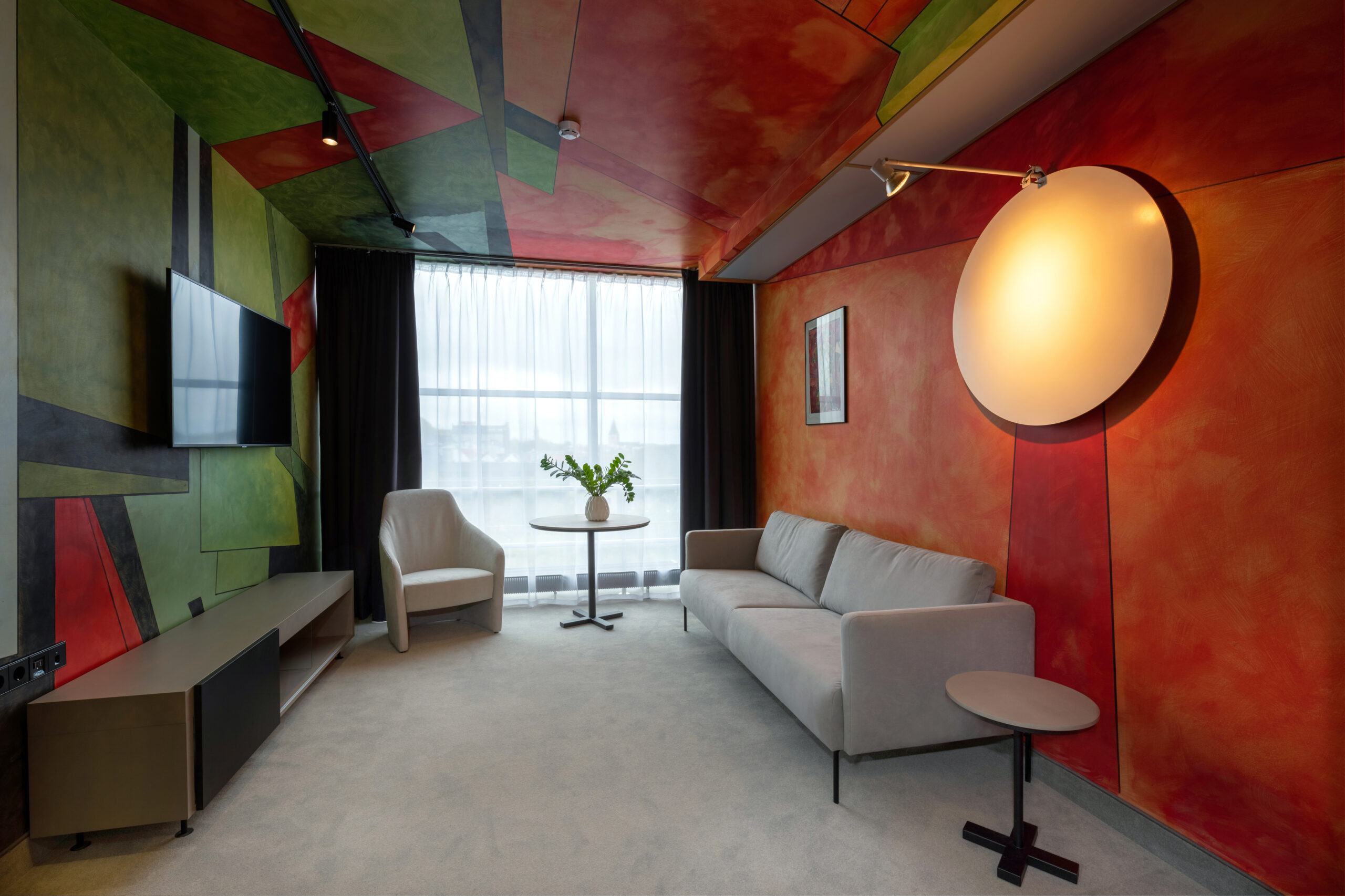
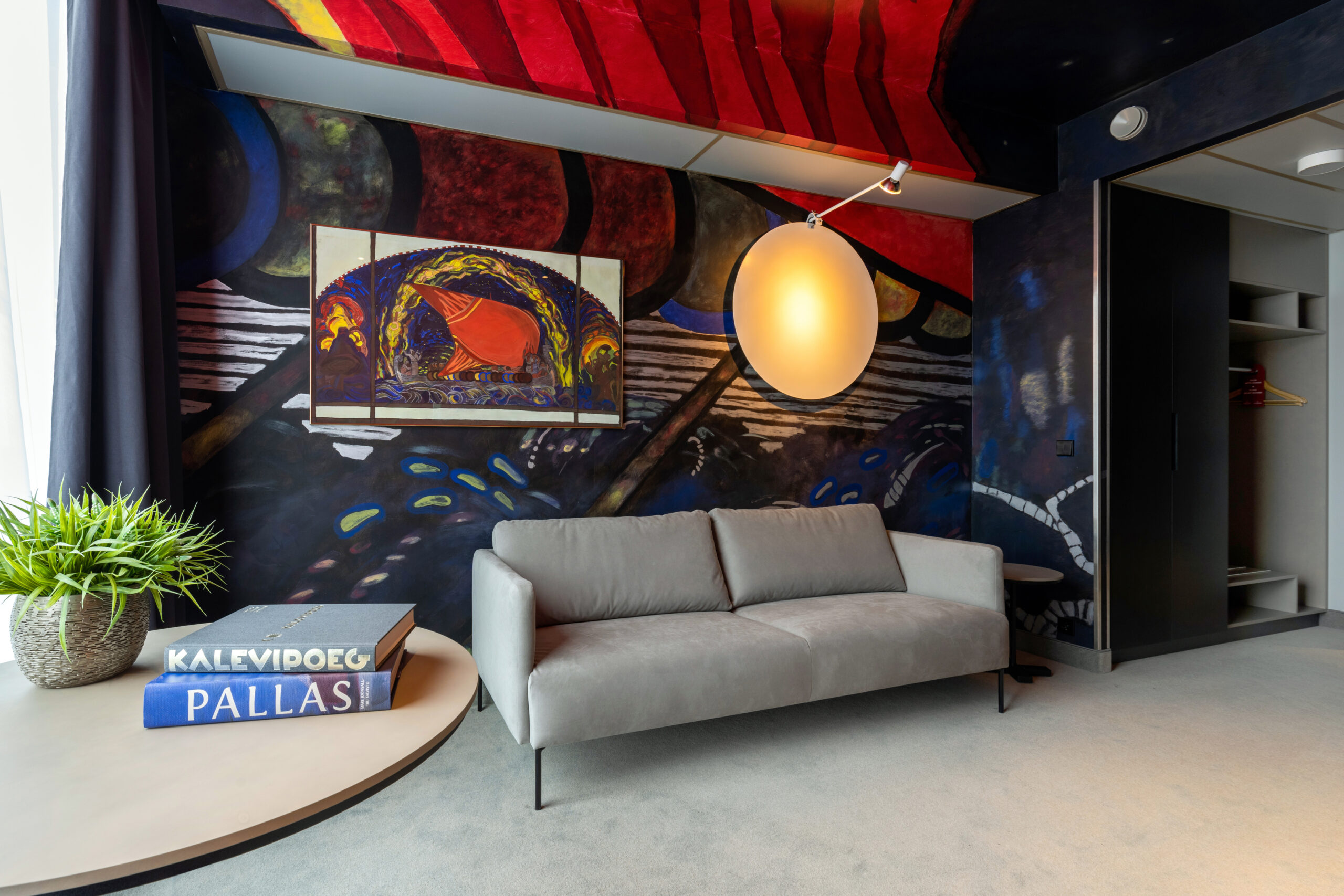
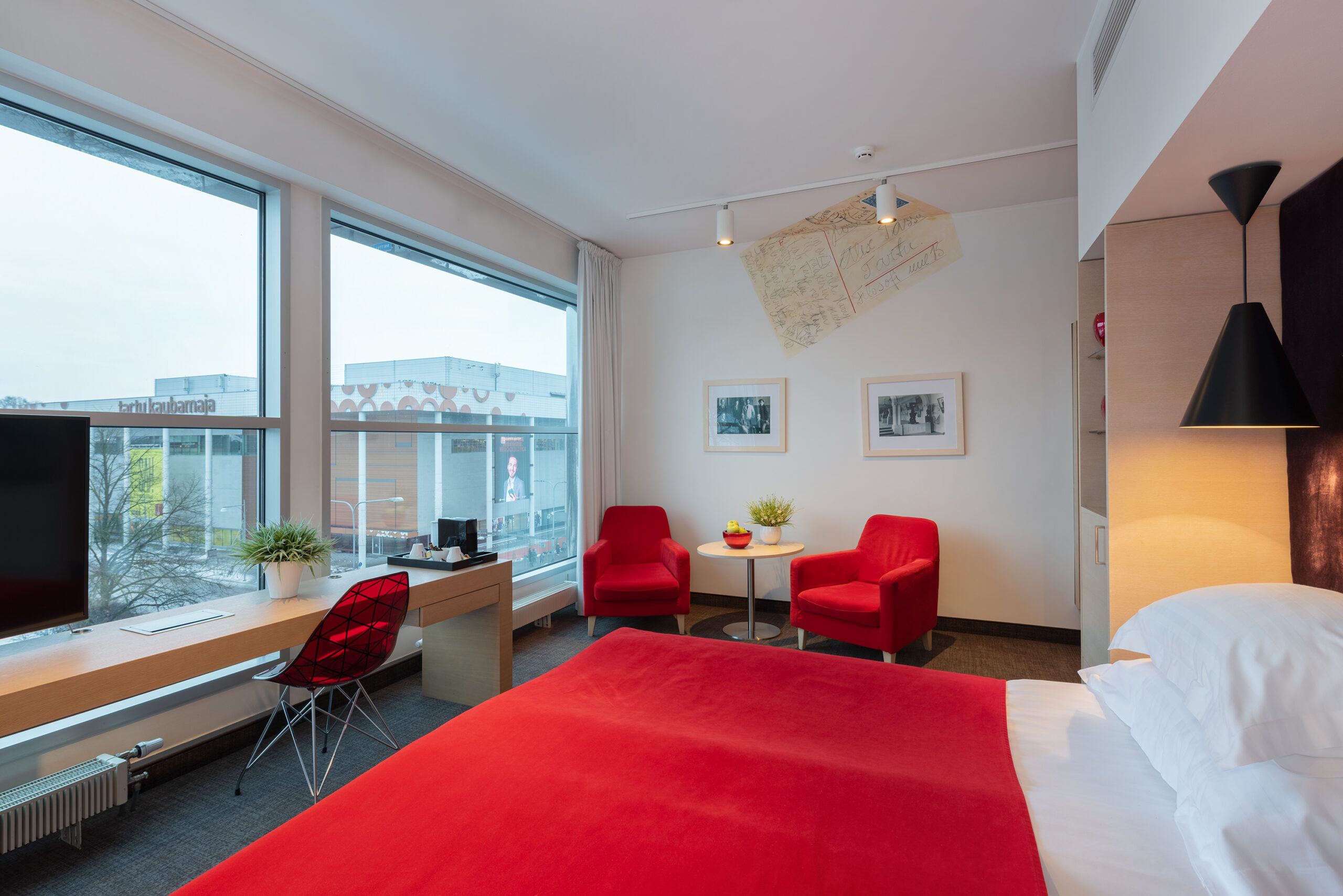
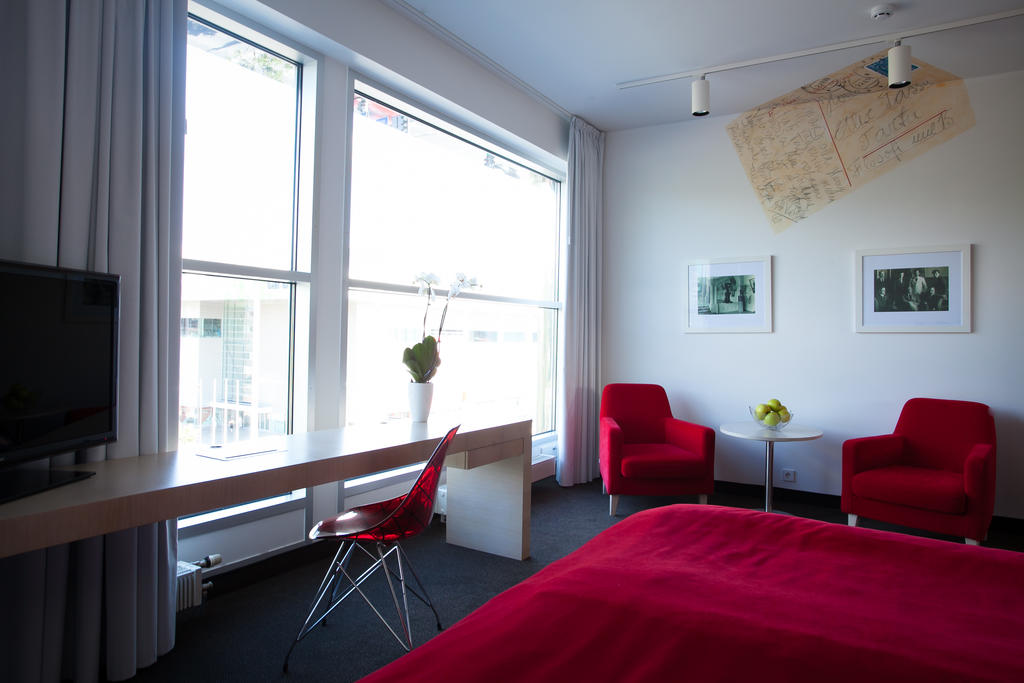
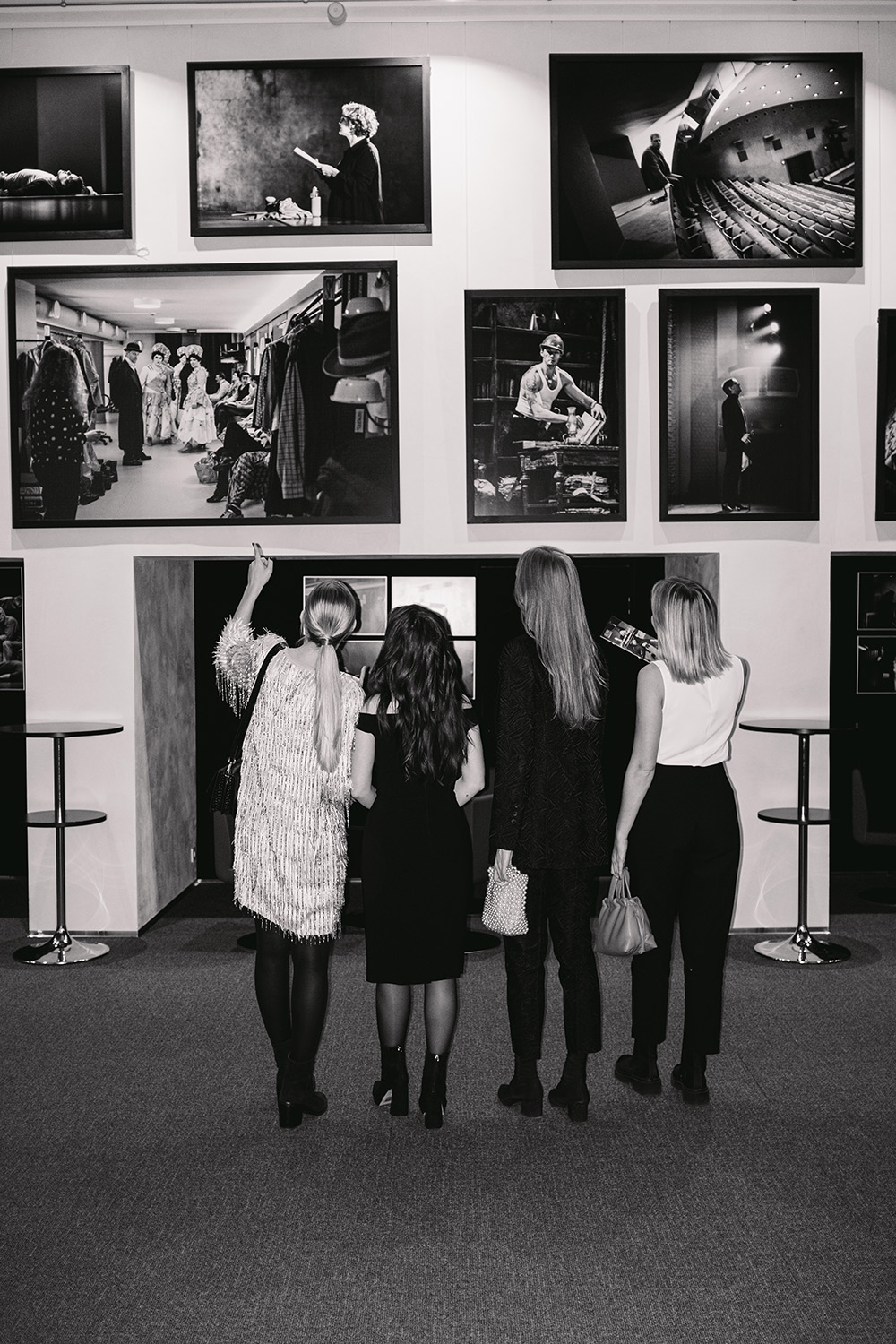
Pallas, the first Estonian school of fine arts, was established in Tartu in 1919 and it functioned as Estonia’s first independent institution of higher learning which offered an education in the fine arts. Hotel Pallas was built in the place where the school stood until the bombing of Tartu in 1944. The name of the hotel was chosen to commemorate this part of Estonian history and the era in which the events took place. The two institutions are linked not only by their names but also by the paintings that have inspired the interior decoration of the rooms, hommage to the artists associated with the Pallas school. The paintings begin at the reception which has been decorated on the basis of “Interior”, an oil painting by Karl Pärsimägi. The same painting has also been used in the corridors of the third floor, in a more generalised manner. The source of inspiration for the walls of the corridors on the fourth and fifth floor is a painting by Arnold Akberg, titled “Composition”. The reproduction of the painting hangs near the staircase.
lennuk1.jpg "The Aeroplane"
Nikolai Triik (1884-1940) - painter also known for his sketches and caricatures and professor of the Pallas School of Fine Arts. "The Aeroplane" (1910, mixed technique), a national romantic canvas in the Art Nouveau style, was painted as a sketch for a larger mural. It has been realised as such at Hotell Pallas by the students of the Tartu School of Fine Arts. “The Aeroplane” depicts a ship on which Kalevipoeg, the hero of the Estonian national epic, undertook a trip to the end of the world.
arlekiin1.jpg "The Harlequin"
Ado Vabbe (1892-1961) - one of the founders of the Pallas School of Fine Arts as well as a professor and head of the School. "The Harlequin" (1924) is a watercolour painting in a futurist style.
pyhapaev1.jpg "Sunday"
Felix Randel (1901-1977) - painter and caricaturist; student of the Pallas School of Fine Arts. The canvas "Sunday" (1924) is painted in a cubist Art Deco style.
muusika1.jpg "The Music"
Kuno Veeber (1898-1929) - a painter and a graduate of the Pallas School of Fine Arts. "The Music" (1923) has some cubist elements.
veneetsia1.jpg "A Motif of Venice"
Konrad Mägi (1878-1925) - painter, one of the founders of the Pallas School of Fine Arts, the first head of the School and a highly regarded art teacher. The post-impressionist canvas "A Motif of Venice" belongs to the series of paintings influenced by his trip to Italy.
interj_ed_timbermanniga1.jpg “Interior with Eduard Timbermann”
Karl Pärsimägi (1902-1942), oil, 1934
hall_valge1.jpg “Grey and White”
Eduard Ole (1898-1995), pastel, 1930
aktid1.jpg “Nudes”
Eduard Ole (1898-1995), sanguine, 1928
puuma_panter1.jpg “Puma and Panther”
Eduard Wiiralt (1898-1954), dry-point etching, 1937
tants1.jpg “Dance”
Felix Randel (1901-1977), ink, 1927
kohalik_talent1.jpg “Local Talent”
Erich Pehap (1912-1981), coloured monotype, 1967
BOOKING


SURNAME AND FIRST NAME*


COMPANY


PHONE


FAX


E-MAIL


I WILL BOOK


PERIOD OF STAY*


SPECIAL REMARKS


PAYMENT


In case of advance payment please specify exact references of the payer.


I WOULD LIKE TO RECEIVE THE CONFIRMATION BY
Fax E-mail


Your reservation is guaranteed from the moment you have received the confirmation from the hotel which will arrive within 24 hours.